

Chatsonic
AI marketing agent for research, writing, and content workflows
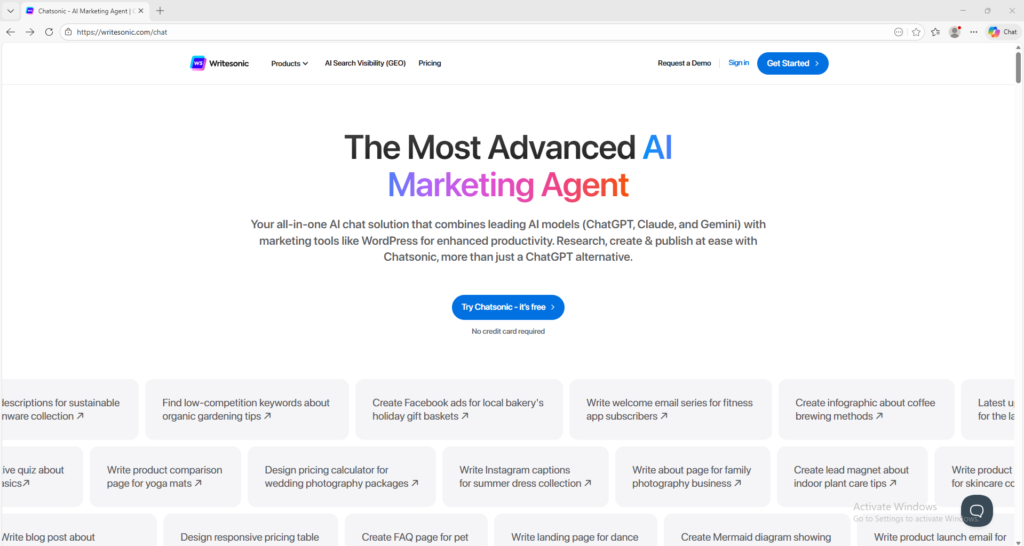
Chatsonic is an AI marketing agent that helps with research, content creation, AI chat, and marketing workflows. It is useful for marketers, creators, and teams who want a more specialized AI tool than a general chatbot.
Overview
Chatsonic is an AI marketing agent designed to help with research, content creation, AI chat, SEO-oriented workflows, and publishing support.
What it can do:
- Chat using multiple AI model options
- Search the web for up-to-date information
- Help create marketing and writing content
- Analyze PDFs and summarize videos in supported workflows
- Support brand-oriented content and marketing tasks
Who should use it:
Marketers, content creators, founders, bloggers, agencies, and teams who want an AI tool focused on marketing and content workflows.
Things to note:
The exact features and usage limits depend on your plan. Some advanced workflows, credits, or optimization features are tied to paid access.
Final quick verdict:
Chatsonic is a practical AI tool for users who want more than basic chat and need research, writing, and marketing-focused workflows in one place.
How to Use
1. Visit the official Chatsonic page and start with the free version or sign in to your Writesonic account.
2. Open a new chat and decide what type of task you want to complete, such as research, content drafting, SEO support, brainstorming, or publishing preparation.
3. Enter a clear prompt describing your goal, for example a blog outline, product description, marketing angle, keyword-focused article, or competitor research request.
4. If your task needs current information, use the web-enabled workflow so Chatsonic can pull more up-to-date context where supported.
5. For content work, ask Chatsonic to generate a first draft, then refine it by requesting a different tone, structure, angle, or level of detail.
6. If you are working with files, PDFs, or video summaries in supported modes, upload the file or provide the source and ask specific questions about it.
7. If you want brand consistency, guide the output with clear brand voice instructions, audience details, and content goals.
8. Review the response carefully, especially claims, facts, and SEO recommendations, then ask for revisions until the draft matches your needs.
9. Once the content is ready, use it as a draft for your blog, landing page, campaign, or publishing workflow.
10. Save or reuse strong prompts so future marketing tasks become faster and more consistent.
Screenshots